Digital Economy: Is the era of robots beginning?
Automation is addressing numerous strategic challenges that the global economy will face in the coming years – and robots are playing a crucial role in this transformation. At the same time, robotics itself develops rapidly, thanks to the integration of artificial intelligence: this, in our view, creates a wide range of attractive investment opportunities.
Authors: Bertrand Born and Luca Menozzi

Opportunities of automation and robots for the Digital Economy: Key points
- Artificial Intelligence (AI) enables robots to better perceive their operating environment and interact with it in real time. This makes AI-powered robots safer and more adaptable, allowing them to work directly with humans.
- Demographics, rising wages, as well as smart manufacturing and the race for greater competitiveness are driving automation and the increased use of robots.
- As robots increasingly expand into new areas such as healthcare and services, they are expected to unlock even more growth and innovation potential.
What do Tesla founder Elon Musk’s trillion-dollar compensation package, the latest five-year plan of the Chinese government, and cleaning a hotel suite have in common? First, they all made headlines in recent months. And second, as different as these initiatives may seem, robots play a crucial role in their realization.
From trillion-dollar compensation to five-year plans: Robots will be essential
The $1 trillion package approved by Tesla shareholders for Musk is heavily dependent on whether the U.S. electric car manufacturer can rise to become a leading robotics company within the next decade: one that sells no fewer than 100 million humanoid robots annually and operates a robotaxi service generating ten times the revenue of Uber, as the newswire Reuters reported.
China’s new five-year plan also hinges on breakthroughs in robotics. The country aims to transform from the world’s factory into a global innovation leader, with the mass deployment of robotics at the core of this transition, as the newspaper South China Morning Post reported. Moreover, robots are expected to address challenges posed by an aging population and rising labor costs in China by serving as affordable labor alternatives.
Not five years from now, but as early as last August, diligent robots cleaned a hotel room as part of a challenge during the inaugural World Humanoid Robot Games, held – not coincidentally – in Beijing. 280 teams from 16 countries participated, delivering scenes reminiscent of sci-fi movies, as the images of the newswire Reuters show.
Robots – prime example of Digital Economy opportunities
Indeed, these futuristic visions have already begun to shape our present. This is driven by a range of factors, most notably the rapid development of so-called physical artificial intelligence (AI). For the first time, this technology enables machines to be trained in a digitally simulated environment. Thus, AI allows robots to better sense the environment where they operate and to interact with it in real time. This makes AI-powered robots safer and more adaptable, allowing them to work not only in closed industrial processes but also directly with and for humans. This opens up a vast array of new applications that are difficult to predict today.
Humanoid robots
Whether it’s Optimus Gen2 (Tesla), Eve (1X Technologies), or Pepper (Softbank), broker Macquarie Research identifies no fewer than 20 major projects by companies developing humanoid robots. These robots could very well represent the future: their AI can be trained on vast amounts of human data, and their human-like appearance makes them particularly suitable for use near people (see below). This presents significant growth potential: according to analysts at Bank of America, approximately 3 billion such robots could be in use by 2060, most of them in households.
From an investor’s perspective, this could also be intriguing. AI-supported and trained robots fit seamlessly into the structural investment theme of the Digital Economy – digital products and services are now extensively interconnected and ubiquitous. The widespread adoption of robots could open up entirely new markets for the digital economy, potentially driving above-average growth and attractive capital returns. Furthermore, robotics could play a significant role in sustainable development.
China installs over half of the world’s new robots
When it comes to growth, the floodgates already seem wide open. According to the International Federation of Robotics (IFR) in its "World Robotics 2025" yearbook, the installation of traditional industrial robots alone has been growing at an annual rate of 7% since 2019. By 2020, there were already 3 million such machines in operation worldwide, with the electronics sector surpassing the automotive industry in applications for the first time. According to IFR, 542,000 new industrial robots were installed in factories worldwide in 2024, more than double the number from a decade ago.
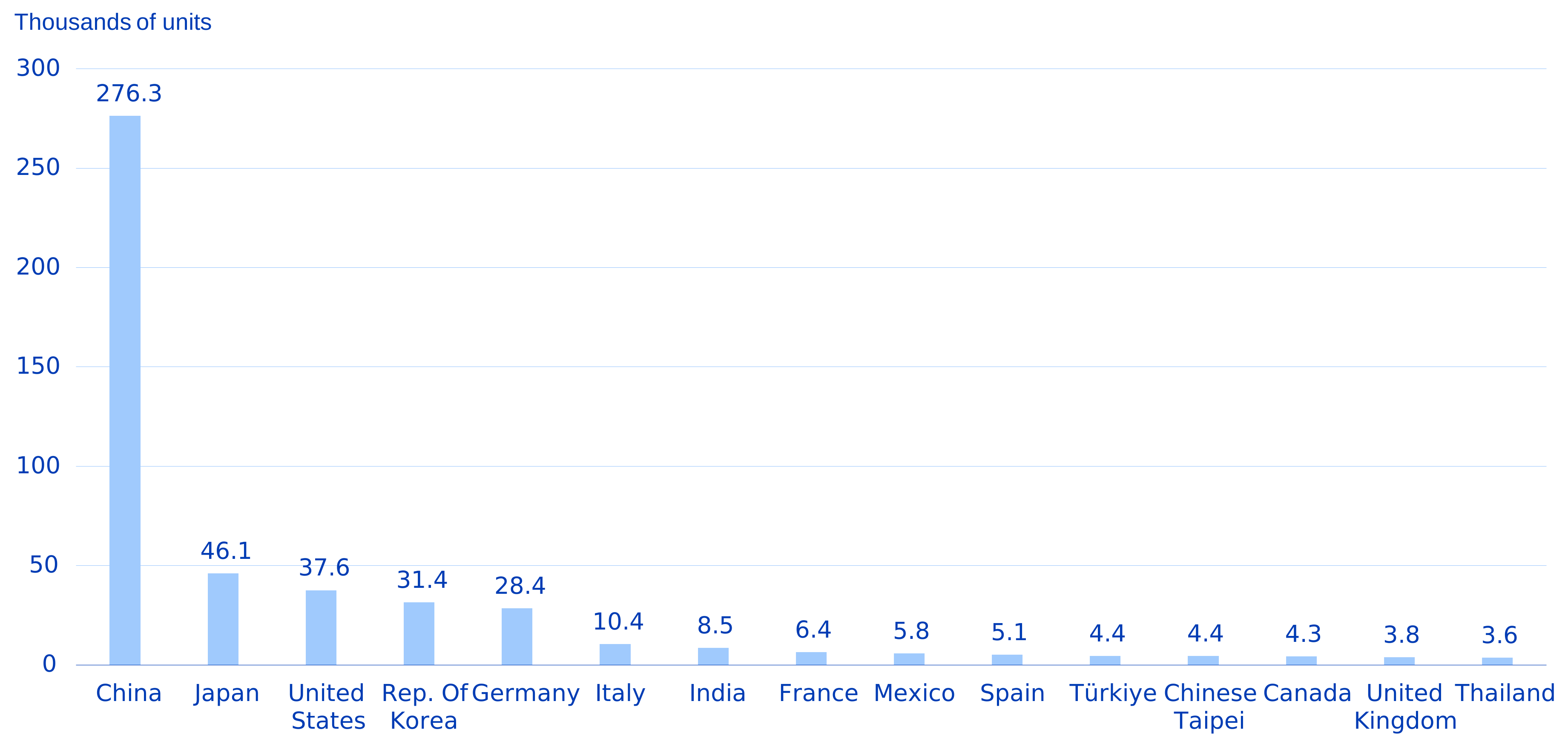
Asia accounted for the largest share of new installations in 2024, with 74% of all new robots being deployed there. Europe accounted for 16%, and the Americas for 9%. Among individual countries, China emerged as the largest robot market globally, with 54% of all units installed (see chart below, data from 2023). Chinese manufacturers are more focused on their domestic market than on exports: according to IFR, the Chinese industry installed a record 295,000 robots in a single year. The yearbook predicts that the Chinese manufacturing industry has the potential for an average annual growth rate of 10% through 2028.
Annual new installations of industrial robots in the 15 largest markets, 2023
This growth, aligned with the goals of the five-year plan, also carries geopolitical significance: the technological race between China and the U.S. is being fought on the robotics front as well. Commentators such as the U.S.-magazine Forbes suggest that robots will be one of the innovations forming the backbone of future economic and military strength. The Ukraine war, where remote-controlled drones were used on a large scale for the first time, serves as an omen in this regard.
Robots and automation: what drives growth
The race for economic and military supremacy is just one of several structural and global drivers influencing the growth potential of robot manufacturing:
- Demographics: Due to the longevity trend, which is also intriguing from an investment perspective, developed economies face aging populations and shrinking labor pools. This threatens economic growth, but companies have already started to respond. With fewer human workers available, they increasingly rely on automation to maintain productivity. Robot density – the number of robots per 10,000 industrial workers – continues to rise worldwide. South Korea, Singapore and China are leading this trend.
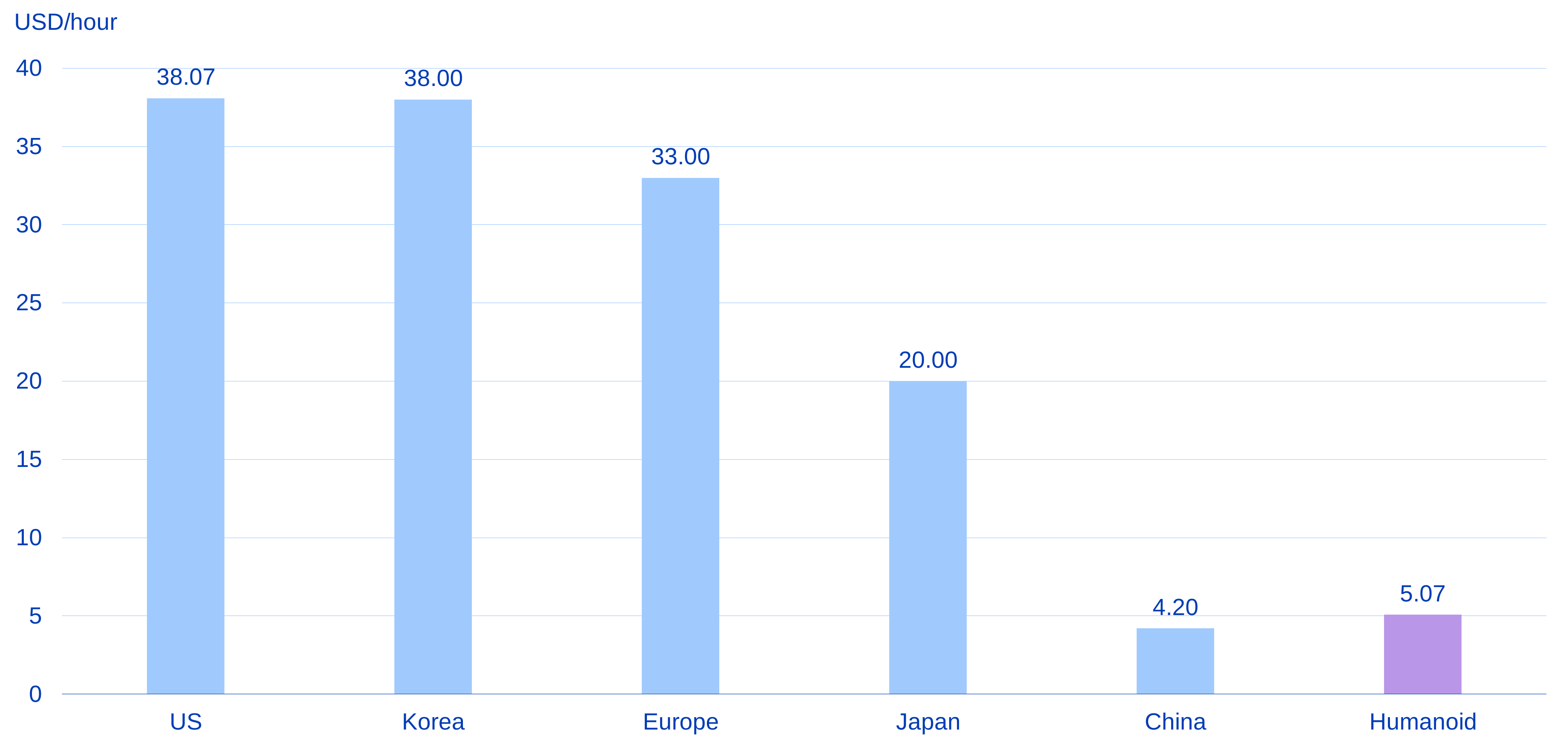
- Rising labor costs: As labor shortages increase and low-wage markets like China lose their cost advantage, companies face higher labor costs, making automation an attractive tool for cost control. According to Macquarie Research, hourly wages for automotive industry workers in China are now barely cheaper than the comparable deployment costs of humanoid robots (see chart below). We are confident that this gap is going to close and reverse in the near future.
- Supply chain security and multi-polarity: The supply chain disruptions caused by the COVID-19 crisis highlighted vulnerabilities for businesses worldwide. This has coincided with the emergence of a multi-polar world, where globalization is increasingly challenged by national interests and trade tariffs. In this environment, companies may face pressure to shift their supply chains closer to home, often requiring higher investments and leading to increased operating costs. However, leveraging automation can help mitigate these challenges by enhancing efficiency and offsetting some of the associated costs.
- Smart Manufacturing: Manufacturing is being revolutionized by advanced technologies such as industrial software, sensors, connected devices, simulation platforms, and AI systems. These innovations enable smart factories to leverage real-time data, predictive maintenance, advanced imaging systems, and "digital twins" to optimize operations, enhance flexibility, and reduce waste. Robotics plays a pivotal role in this transformation by delivering precision, speed, and consistency, while seamlessly integrating with digital tools like AI and IoT.
- Sustainability and Efficiency: While automation can lead to higher electricity consumption due to the energy required to power advanced systems, it also brings significant benefits that support sustainability and efficiency. Digital tools such as IoT, analytics, and smart controls enable manufacturers to optimize processes, improve safety, reduce waste, and minimize water and energy usage, supporting sustainability goals and conserving resources, as we have previously reported.
- Competitiveness and work safety: Robots excel at performing repetitive tasks with greater speed and precision than humans, resulting in higher output and improved quality. By minimizing errors, enhancing productivity, and operating continuously without breaks, they significantly reduce long-term operational costs. As a result, businesses increasingly adopt robots to maintain a competitive edge in global markets. Robots can also take over dangerous or unpleasant tasks, reducing work accidents and improving quality of labour.
- Expansion of use cases: Thanks to advancements in AI, robots are increasingly making their way into service sectors such as cleaning, cooking, hospitality, and even caregiving – areas that already are or may be impacted by shortages in human labor. This is particularly evident with humanoid robots, where adaptive AI systems allow robots to learn and adapt within complex workflows as well as human-robot interaction. As noted by IFR, humanoid robots are already taking on roles in hospitality, education, and public services, replicating human expressions, gestures, and even emotions to better connect with people.
Robots as a countermeasure to wage inflation: Hourly Wages in auto manufacturing vs. costs of humanoid robots
Robots at work – what happens to human labor?
However, these potential growth drivers are accompanied by risks that investors should consider. The primary risk associated with the growing presence of robots and automation in our economy lies in its potential impact on the job market. The displacement of workers could result in job losses, wage stagnation, and worsening income inequality. However, we currently see little evidence of widespread unemployment, as the labour market in developed regions remains tight. To address these challenges, mitigation strategies such as upskilling and reskilling the workforce could play a crucial role. Additionally, implementing measures like a robot tax to fund a universal basic income might offer a viable solution for the future.
Cybersecurity is another concern: industries are becoming increasingly interconnected, which heightens their vulnerability. The manufacturing sector is now one of the most targeted by cyberattacks. These attacks threaten not only data but also machines, worker safety, and production.
Robots and automation: Investment areas with potential
The robot value chain is vast and diverse, spanning everything from traditional robotics companies and machine component manufacturers to semiconductor and sensor producers, as well as technology firms specializing in integrating software and AI systems into robots. As robots continue to expand into new verticals such as healthcare and services, they are expected to unlock even more opportunities for growth and innovation.
Our Conclusion:
While structural factors such as demographics, wage inflation, supply chain restructuring, and technological advancements are likely to support the long-term growth prospects of robotics, the sector remains vulnerable to economic cycles. Automation companies typically follow industrial cycles closely, which can lead to short-term volatility, as reflected in market valuations. Structurally, we believe the widespread adoption of robots could open up new markets for the digital economy, driving above-average growth and offering attractive capital returns.
Investment theme «Digital Economy»: Insights
Legal disclaimer Switzerland
Legal disclaimer Switzerland
This document only serves advertising and information purposes, is for distribution in Switzerland only and is not directed at persons in whose nationality or place of residence prohibit access to such information under applicable law. Where not indicated otherwise, the information concerns the collective investment schemes under the law of Luxembourg managed by Swisscanto Asset Management International S.A. (hereinafter "Swisscanto Funds"). The products described are undertakings for collective investment in transferable securities (UCITS) within the meaning of EU Directive 2009/65/EC, which is governed by Luxembourg law and subject to the supervision of the Luxembourg supervisory authority (CSSF). This document does not constitute a solicitation or invitation to subscribe or make an offer to purchase any securities, nor does it form the basis of any contract or obligation of any kind. The sole binding basis for the acquisition of Swisscanto Funds are the respective legal documents (management regulations, sales prospectuses and key information documents (PRIIP KID), as well as financial reports), which can be obtained free of charge at https://products.swisscanto.com as well as at Swisscanto Fondsleitung AG, Bahnhofstrasse 9, CH-8001 Zurich (also acting as representative of the Luxembourg Swisscanto funds in Switzerland) or in all offices of Zürcher Kantonalbank. Paying Agent for the Luxembourg Swisscanto funds in Switzerland is Zürcher Kantonalbank, Bahnhofstrasse 9, CH-8001 Zurich. Information about the sustainability-relevant aspects in accordance with the Regulation (EU) 2019/2088 as well as Swisscanto's strategy for the promotion of sustainability and the pursuit of sustainability goals in the fund investment process are available on the same website. The sub-fund referred to in the document is subject to Article 9 of Regulation (EU) 2019/2088. The distribution of the fund may be suspended at any time. Investors will be informed about the deregistration in due time. The investment involves risks, in particular those of fluctuations in value and earnings. Investments in foreign currencies are subject to exchange rate fluctuations. Past performance is neither an indicator nor a guarantee of future success. The risks are described in the sales prospectus and in the PRIIP KID. The information contained in this document has been compiled with the greatest care. Despite professional procedures, the correctness, completeness and topicality of the information cannot be guaranteed. Any liability for investments based on this document will be rejected. The document does not release the recipient from his or her own judgment. In particular, the recipient is recommended to check the information for compatibility with his or her personal circumstances as well as for legal, tax and other consequences, if necessary, with the help of an advisor. The prospectus and PRIIP KID should be read before making any final investment decision. The products and services described in this document are not available to U.S. persons under the relevant regulations (in particular Regulation S under the U.S. Securities Act of 1933).
Data as at (where not stated otherwise): 11.2024
© Zürcher Kantonalbank. All rights reserved.
Legal disclaimer international
Legal disclaimer international
This document only serves advertising and information purposes and is not directed at persons in whose nationality or place of residence prohibit access to such information under applicable law. Where not indicated otherwise, the information concerns the collective investment schemes under the law of Luxembourg managed by Swisscanto Asset Management International S.A. (hereinafter "Swisscanto Funds"). The products described are undertakings for collective investment in transferable securities (UCITS) within the meaning of EU Directive 2009/65/EC, which is governed by Luxembourg law and subject to the supervision of the Luxembourg supervisory authority (CSSF).
This document does not constitute a solicitation or invitation to subscribe or make an offer to purchase any securities, nor does it form the basis of any contract or obligation of any kind. The sole binding basis for the acquisition of Swisscanto Funds are the respective published legal documents (management regulations, sales prospectuses and key information documents (PRIIP KID), as well as financial reports), which can be obtained free of charge at https://products.swisscanto.com/. Information about the sustainability-relevant aspects in accordance with the Regulation (EU) 2019/2088 as well as Swisscanto's strategy for the promotion of sustainability and the pursuit of sustainability goals in the fund investment process are available on the same website. The sub-fund referred to in the document is subject to Article 9 of Regulation (EU) 2019/2088.
The distribution of the fund may be suspended at any time. Investors will be informed about the deregistration in due time. The investment involves risks, in particular those of fluctuations in value and earnings. Investments in foreign currencies are subject to exchange rate fluctuations. Past performance is neither an indicator nor a guarantee of future success. The risks are described in the sales prospectus and in the PRIIP KID. The information contained in this document has been compiled with the greatest care. Despite professional procedures, the correctness, completeness and topicality of the information cannot be guaranteed. Any liability for investments based on this document will be rejected. The document does not release the recipient from his or her own judgment. In particular, the recipient is recommended to check the information for compatibility with his or her personal circumstances as well as for legal, tax and other consequences, if necessary, with the help of an advisor. The prospectus and PRIIP KID should be read before making any final investment decision.
An overview of investors' rights is available at https://www.swisscanto.com/int/en/legal/summary-of-investor-rights.html.
The products and services described in this document are not available to U.S. persons under the relevant regulations (in particular Regulation S under the U.S. Securities Act of 1933). Data as at (where not stated otherwise): 11.2024
© Zürcher Kantonalbank. All rights reserved.