Circular Economy: The dawn of a new era
The conflict in Middle East is bringing the supply of raw materials into the spotlight. Is this the moment for the Circular Economy? After all, it is specifically designed to manage resources sustainably. Cezara Lozneanu and Yohann Terry delve into this question in their analysis – and highlight why the investment theme itself is now subject to new conditions.
Authors: Cezara Lozneanu and Yohann Terry

Key takeaways on the new drivers for the Circular Economy:
- New political blocs and deglobalization are also changing the landscape for the Circular Economy.
- The scarcity of critical raw materials could dramatically worsen – fueled further by sustainable trends like energy transition and electrification.
- By keeping essential resources within the system, the Circular Economy can make a significant contribution to supply security and economic independence. We anticipate strong growth in circular business models.
The protracted struggle for a peace agreement highlights the issue: In the Iran conflict, the supply of raw materials through the Strait of Hormuz has become the decisive factor. At stake are not only about 20% of the world's oil and natural gas production; the blockade of this maritime route also severely impacts the global supply of diverse materials such as copper, helium, and sulfur for fertilizers. The looming long-term consequences of this scarcity have already led to significant volatility in commodity and financial markets.
Meanwhile, we observe that investments in the Circular Economy sector are showing strong performance in some cases. This seems only logical: Following the principle of "Reduce, Recycle, Reuse, Replace" – the "4 Rs" – the sustainable investment theme decouples economic growth from resource consumption. It is no longer just about protecting the environment and resources: By keeping critical raw materials within the system, the Circular Economy can make an important contribution to supply security and economic independence.
Circular Economy: In addition to regulation, geopolitics is becoming a structural driver
Interestingly, a paradigm shift is also emerging for the Circular Economy. In our view, the investment theme is moving beyond the phase where regulation was the main influencing factor. Environmental laws and government incentives acted as structural drivers for growth and returns; companies addressing sustainability concerns with their products and services benefited from tax breaks or subsidies. Conversely, entities that showed no such ambitions were penalized with CO2 emission taxes or fines. Globalization and international cooperation served as the overarching framework.
Regulation remains an important driver, particularly in Europe. However, geopolitics is increasingly emerging as a global driving force. As the recent Iran conflict has highlighted, traditional alliances such as NATO or the United Nations are being challenged by the formation of new political blocs. Meanwhile, free trade is increasingly facing protectionist tendencies; the tariff disputes fueled by the U.S. are a prime example. Direct consequences include high volatility in financial markets and the scarcity of strategic raw materials – the latter often intentionally induced and by no means limited to the Strait of Hormuz.
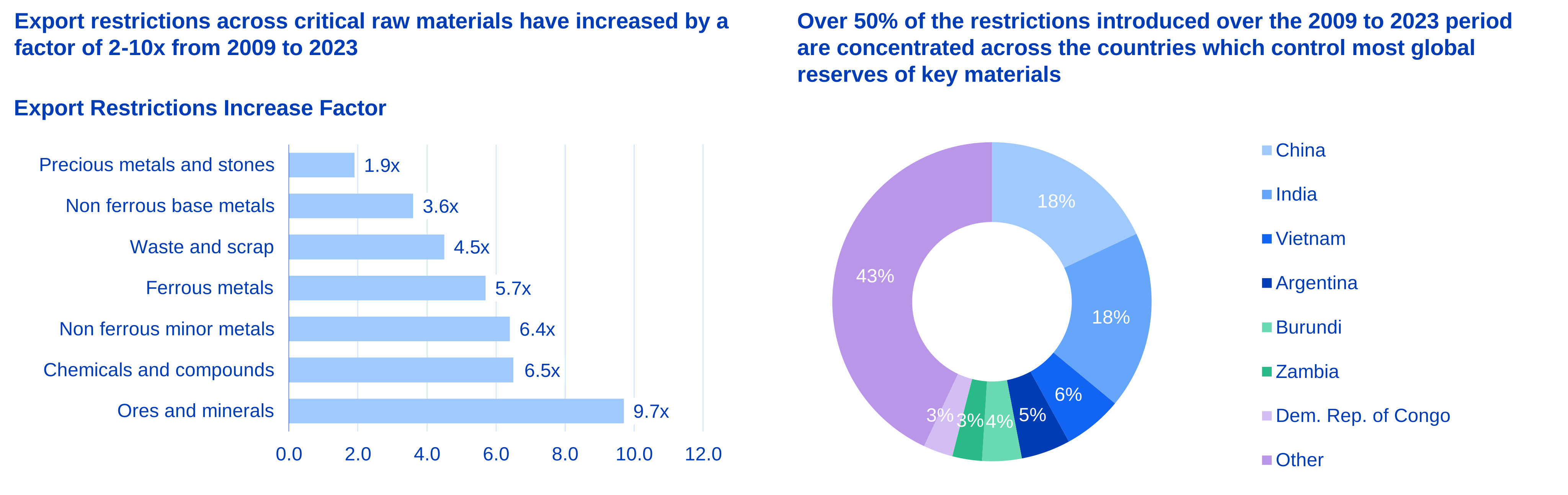
For instance, surveys conducted by the OECD last year show that export restrictions on critical raw materials have increased tenfold between 2009 and 2023 (see charts below). Ores and minerals have been particularly affected. Furthermore, the organization calculates that half of the trade barriers were imposed by countries with significant raw material reserves – notably China, which dominates the rare earths market (according to the International Energy Agency, China controls about 90% of refinery production), as well as India, Vietnam, and Argentina. The power play over raw materials has long since begun.
Circular economy: Trade barriers on critical minerals as drivers
Given these developments, states, companies, and investors have little choice: They are compelled to focus more on economic independence and supply security.
The Circular Economy, which keeps essential resources within the system and counteracts depletion, presents itself as an attractive solution and is likely to gain even more importance from a sustainability perspective. This paradigm shift toward geopolitics as a driver coincides with two other structural trends that are also characterized by their "hunger" for raw materials.
Sustainable trends are hungry for critical minerals. Is the Circular Economy the solution?
One such trend is the energy transition away from fossil fuels toward low-carbon energy sources. As we have previously reported, this shift is in full swing. Gobal investments in clean technologies climbed to an estimated USD 2.2 trillion between 2015 and 2025, according to the IEA. During the same period, investments in fossil fuels dropped by one-fifth to an estimated USD 1.1 trillion. The Middle East conflict is likely to further support the trend toward decarbonization: It is evident that the wind cannot be blocked, and sunlight cannot be bombed.
The energy transition goes hand in hand with another sustainable trend: electrification. Growth is also expected here. By 2050, electricity demand could double or even triple, according to the IEA, not least due to the high energy consumption of data centers, which are springing up worldwide due to the boom in artificial intelligence (AI).
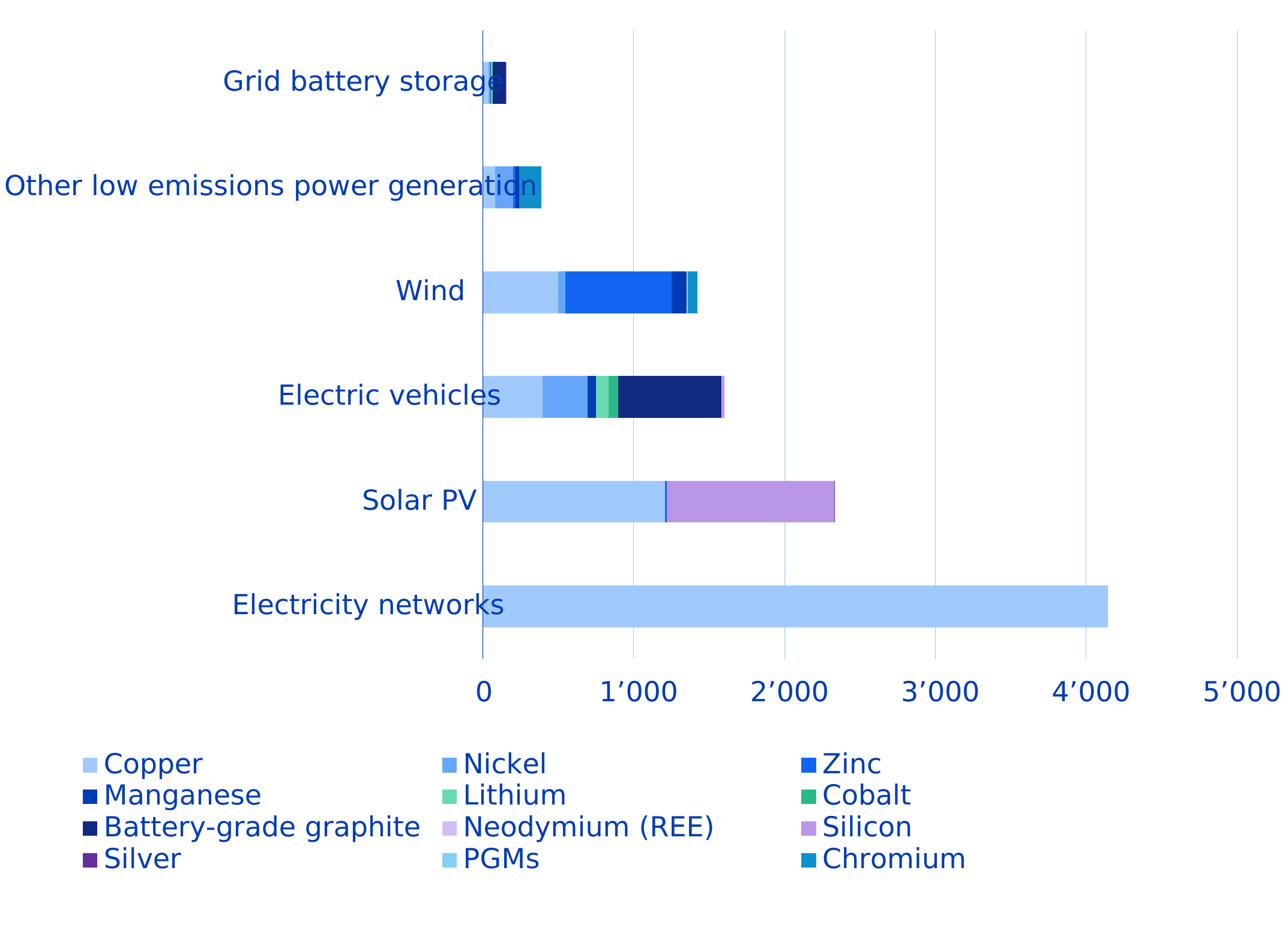
And it is clear: neither the energy transition nor electrification can proceed without critical raw materials, as we have shown in a detailed analysis. For example, large amounts of copper and aluminum are used in power grids. Meanwhile, lithium, nickel, cobalt, manganese, and graphite are crucial for battery performance. It is also evident that photovoltaic systems, wind farms, and electric vehicles generally require more critical raw materials than their fossil fuel-powered counterparts. The rapid proliferation of new technologies for clean and renewable energy could, therefore, lead to an unprecedented demand for these materials. And the current linear economy, with its resource depletion, is poorly equipped to meet this demand.
Consumption of critical minerals for clean technologies (in kilotons kt)
Environmental and climate protection remain strong drivers for the Circular Economy
Investors interested in sustainability can also view the topic of supply security and economic independence in the context of environmental and climate protection: Careful management of natural resources can make a direct positive contribution here and is almost imperative to address their scarcity. According to the Global Footprint Network, about 1.7 Earths would have been needed in 2024 to keep up with consumption. From our perspective, it is clear: Even if environmental issues have currently taken a backseat in some countries, "clean" technologies and the circular economy, with their focus on the "4 Rs," remain crucial for addressing resource scarcity. The recent turbulence in oil and gas markets further underscores this trend.
With a view to protecting our environment and ensuring security of supply, it therefore seems logical to make targeted investments in the four sub-sectors of the Circular Economy. This can indeed pay off, as we expect significant potential here: If the penetration of the economy with circular processes increases from the current 7% to 14% over the next ten years, the circular economy could grow twice as fast as global GDP. The following areas are our focus:
Circular Economy: The "4 Rs" in service of supply security and sustainable resource management
- Reduce Promising investment fields include efficient material use in design and extending product lifespans. Other areas of interest include "zero waste" approaches and solutions that promote the sustainable use of products.
Company example U.S. semiconductor manufacturer Analog Devices consistently designs its products to reduce emissions, such as those from industrial motors. - Replace The focus here is on transitioning to efficiently reusable packaging materials like paper and aluminum, producing biodegradable plastics, and replacing harmful chemicals.
Company example Crown Packaging is a global leader in the production of paper and cardboard packaging as well as beverage cans and has internalized circular processes. - Reuse Promising areas include business models in the "secondhand & rental economy" and the market for scrap cars, which can contribute to recovering important metals from old vehicles.
Company example Ritchie Brothers Global, a Canadian platform for reselling scrap vehicles, holds a dominant market position and is currently experiencing double-digit growth rates. - Recycle Our focus is on closed loops for materials and natural resources like water, as well as so-called biorecycling, the reuse of biological waste.
Company example South Korean company Sungeel Hitech is a market leader in recycling lithium-ion batteries, such as those used in electric vehicles.
Our conclusion on the importance of the circular economy in the era of geopolitics:
The Circular Economy, through its careful management of resources, can contribute to supply security and economic independence. As such, we believe this investment theme offers significant potential for sustainability-focused investors in an era increasingly shaped by geopolitics. Environmental protection and the fight against the climate crisis remain additional structural drivers.
Investment theme «Circular Economy»: Insights
Legal disclaimer Switzerland
Legal disclaimer Switzerland
This document only serves advertising and information purposes, is for distribution in Switzerland only and is not directed at persons in whose nationality or place of residence prohibit access to such information under applicable law. Where not indicated otherwise, the information concerns the collective investment schemes under the law of Luxembourg managed by Swisscanto Asset Management International S.A. (hereinafter "Swisscanto Funds"). The products described are undertakings for collective investment in transferable securities (UCITS) within the meaning of EU Directive 2009/65/EC, which is governed by Luxembourg law and subject to the supervision of the Luxembourg supervisory authority (CSSF). This document does not constitute a solicitation or invitation to subscribe or make an offer to purchase any securities, nor does it form the basis of any contract or obligation of any kind. The sole binding basis for the acquisition of Swisscanto Funds are the respective legal documents (management regulations, sales prospectuses and key information documents (PRIIP KID), as well as financial reports), which can be obtained free of charge at https://products.swisscanto.com as well as at Swisscanto Fondsleitung AG, Bahnhofstrasse 9, CH-8001 Zurich (also acting as representative of the Luxembourg Swisscanto funds in Switzerland) or in all offices of Zürcher Kantonalbank. Paying Agent for the Luxembourg Swisscanto funds in Switzerland is Zürcher Kantonalbank, Bahnhofstrasse 9, CH-8001 Zurich. Information about the sustainability-relevant aspects in accordance with the Regulation (EU) 2019/2088 as well as Swisscanto's strategy for the promotion of sustainability and the pursuit of sustainability goals in the fund investment process are available on the same website. The sub-fund referred to in the document is subject to Article 9 of Regulation (EU) 2019/2088. The distribution of the fund may be suspended at any time. Investors will be informed about the deregistration in due time. The investment involves risks, in particular those of fluctuations in value and earnings. Investments in foreign currencies are subject to exchange rate fluctuations. Past performance is neither an indicator nor a guarantee of future success. The risks are described in the sales prospectus and in the PRIIP KID. The information contained in this document has been compiled with the greatest care. Despite professional procedures, the correctness, completeness and topicality of the information cannot be guaranteed. Any liability for investments based on this document will be rejected. The document does not release the recipient from his or her own judgment. In particular, the recipient is recommended to check the information for compatibility with his or her personal circumstances as well as for legal, tax and other consequences, if necessary, with the help of an advisor. The prospectus and PRIIP KID should be read before making any final investment decision. The products and services described in this document are not available to U.S. persons under the relevant regulations (in particular Regulation S under the U.S. Securities Act of 1933).
© 2026 Zürcher Kantonalbank. All rights reserved.
Legal disclaimer international
Legal disclaimer international
This document only serves advertising and information purposes and is not directed at persons in whose nationality or place of residence prohibit access to such information under applicable law. Where not indicated otherwise, the information concerns the collective investment schemes under the law of Luxembourg managed by Swisscanto Asset Management International S.A. (hereinafter "Swisscanto Funds"). The products described are undertakings for collective investment in transferable securities (UCITS) within the meaning of EU Directive 2009/65/EC, which is governed by Luxembourg law and subject to the supervision of the Luxembourg supervisory authority (CSSF).
This document does not constitute a solicitation or invitation to subscribe or make an offer to purchase any securities, nor does it form the basis of any contract or obligation of any kind. The sole binding basis for the acquisition of Swisscanto Funds are the respective published legal documents (management regulations, sales prospectuses and key information documents (PRIIP KID), as well as financial reports), which can be obtained free of charge at https://products.swisscanto.com/. Information about the sustainability-relevant aspects in accordance with the Regulation (EU) 2019/2088 as well as Swisscanto's strategy for the promotion of sustainability and the pursuit of sustainability goals in the fund investment process are available on the same website. The sub-fund referred to in the document is subject to Article 9 of Regulation (EU) 2019/2088.
The distribution of the fund may be suspended at any time. Investors will be informed about the deregistration in due time. The investment involves risks, in particular those of fluctuations in value and earnings. Investments in foreign currencies are subject to exchange rate fluctuations. Past performance is neither an indicator nor a guarantee of future success. The risks are described in the sales prospectus and in the PRIIP KID. The information contained in this document has been compiled with the greatest care. Despite professional procedures, the correctness, completeness and topicality of the information cannot be guaranteed. Any liability for investments based on this document will be rejected. The document does not release the recipient from his or her own judgment. In particular, the recipient is recommended to check the information for compatibility with his or her personal circumstances as well as for legal, tax and other consequences, if necessary, with the help of an advisor. The prospectus and PRIIP KID should be read before making any final investment decision.
An overview of investors' rights is available at https://www.swisscanto.com/int/en/legal/summary-of-investor-rights.html.
The products and services described in this document are not available to U.S. persons under the relevant regulations (in particular Regulation S under the U.S. Securities Act of 1933).
© 2026 Swisscanto Asset Management International S.A. All rights reserved.